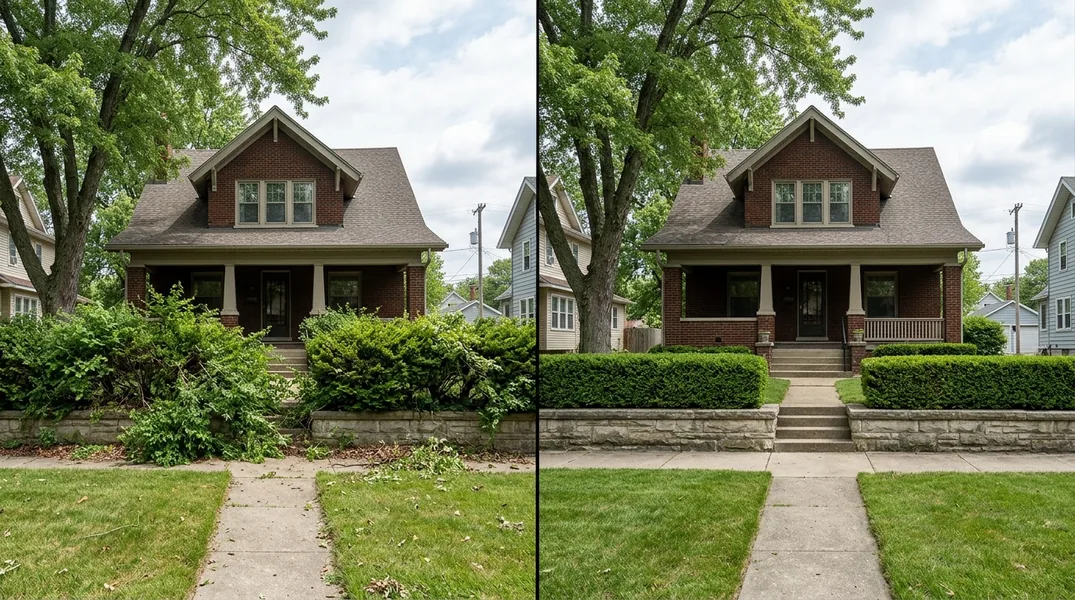
Understanding Lake-Effect Snow and Ice Storm Damage to Trees
Living in South Bend, you know that winter weather can be unpredictable and severe. Lake-effect snow and ice storms are particularly damaging to trees because they combine heavy precipitation with freezing temperatures, creating conditions that trees simply aren't designed to withstand. When wet, heavy snow accumulates on branches, the weight multiplies quickly. A single inch of wet snow can add 50 pounds of weight per branch, and ice can add even more. This excessive load puts enormous stress on branch joints and the trunk itself.
The danger intensifies when ice forms a thick coating on branches. Unlike snow, which can sometimes slide off, ice adheres stubbornly to every surface. Trees that are already weakened by disease, age, or improper pruning become vulnerable to catastrophic failure. Branches snap under the load, sometimes falling without warning. In worst-case scenarios, entire trees can topple, damaging homes, vehicles, power lines, and neighboring property. Understanding this risk is the first step toward protecting your landscape and keeping your family safe during South Bend's harsh winters.
Pre-Storm Tree Preparation: What You Can Do Now
The best defense against snow and ice damage is preparation before the storm arrives. Start by inspecting your trees for signs of weakness or disease. Look for dead branches, which are more brittle and prone to breaking. Check for branches that cross each other or grow at weak angles, as these are structural liabilities waiting to fail. Trees with included bark, where branches grow too close together, are especially vulnerable. If you spot these issues, professional Tree Trimming & Pruning before winter arrives can significantly reduce your risk.
Remove any dead trees or severely diseased specimens from your property now, rather than waiting for a storm to do it for you. A dead tree is essentially a large stick waiting to fall, and ice storms provide the perfect catalyst. Thin out dense tree canopies by removing interior branches, which allows wind and snow to pass through more easily rather than accumulating on a solid surface. This selective pruning doesn't harm healthy trees and actually encourages better air circulation and light penetration. Additionally, trim branches that hang over your roof, driveway, or power lines. Even a small branch failure in these areas can cause expensive damage or create dangerous situations for your family.
Snow Damage Trees: Recognizing and Responding to Storm Damage
Despite your best preparation efforts, significant storms can still cause damage. Knowing how to recognize snow damage trees and respond appropriately can prevent further injury and protect your property. After a major storm, walk your property carefully and document any broken branches, split trunks, or trees leaning at unusual angles. Take photos for insurance purposes if damage is extensive. Don't attempt to remove large branches yourself, especially if they're still partially attached or hanging over structures. Wet snow and ice make everything slippery and dangerous.
Some damage requires immediate attention, while other damage can wait for warmer weather. If a branch is hanging and poses an immediate hazard, or if a tree is leaning dangerously close to a structure or power line, call Emergency Tree Service right away. South Bend Tree Service responds quickly to storm emergencies and has the equipment and expertise to safely remove dangerous limbs and trees. For less urgent damage, such as broken branches that are safely out of the way, you can schedule Tree Removal or pruning during normal business hours once conditions improve.
Ice Storm Tree Damage: When Professional Help Is Essential
Ice storms often cause more severe damage than snow because ice adds tremendous weight and creates hazardous conditions for anyone attempting cleanup. Ice storm tree damage frequently includes major branch failures, bark splitting from rapid temperature changes, and complete tree failure. When you're dealing with ice storm tree damage, professional intervention becomes not just convenient but necessary for safety and proper tree care. Attempting to remove large branches or fell damaged trees without proper equipment and training can result in serious injury or property damage.
The professionals at South Bend Tree Service have the specialized equipment, training, and insurance to handle storm damage safely and efficiently. We assess each tree to determine whether it can recover with pruning or needs to be removed entirely. Some trees that look severely damaged can actually compartmentalize their wounds and survive with proper care, while others that appear less damaged might be structurally compromised and dangerous. Our arborists understand tree biology and can make these critical distinctions. We also handle cleanup and debris removal, so you're not left with a yard full of branches and wood. Call (219) 291-3724 to discuss your storm damage situation and get a free estimate for cleanup and repairs.
Storm Damage Tree Removal in South Bend: What to Expect
When a tree cannot be saved and must be removed, understanding the process helps you know what to expect and why professional storm damage tree removal in South Bend costs what it does. Removing a storm-damaged tree is more complex than removing a healthy one because the tree's structure is compromised. Branches might be hanging precariously, the trunk might be split or leaning, and the root system could be partially uprooted. Our crews must work carefully to ensure no additional damage occurs to surrounding structures, utilities, or landscaping. We use cranes, chippers, and specialized rigging equipment to safely dismantle the tree piece by piece rather than simply dropping it.
After removal, you'll likely want the stump gone as well, especially if you plan to replant or landscape the area. Stump Grinding removes the remaining stump and roots below ground, leaving your yard ready for new plantings or other uses. The entire process, from tree removal through stump grinding and debris cleanup, transforms a disaster into an opportunity to improve your landscape. For a clear understanding of what storm damage tree removal in your specific situation will involve and what it will cost, contact South Bend Tree Service at (219) 291-3724 or request a free estimate online.
Building a Winter-Ready Landscape: Long-Term Protection
Beyond immediate storm preparation and damage response, building a winter-ready landscape provides long-term protection for your trees and property. Choose tree species that are well-adapted to Indiana's climate and have strong branch structure. Native trees like oaks, hickories, and maples generally handle snow and ice better than ornamental or non-native species. When planting new trees, select species with strong branch angles, which are naturally more resistant to breaking under load. Avoid trees with narrow crotch angles or weak wood. A experienced arborist can recommend the best species for your specific property conditions and help you plan a landscape that will thrive through many winters to come.
Establish a regular maintenance schedule with professional Tree Trimming & Pruning every two to three years. This ongoing care removes weak branches before they become problems, maintains healthy branch structure, and keeps your trees vigorous enough to withstand stress. Healthy trees recover better from storm damage than weakened ones. Proper pruning also improves air circulation through the canopy, allowing snow to fall through rather than accumulating. South Bend Tree Service can develop a customized maintenance plan for your property that keeps your trees healthy, beautiful, and resilient year-round. Contact us today at (219) 291-3724 to discuss your tree care needs and get started on a winter-ready landscape strategy.
Looking for a professional tree service contractor in South Bend? South Bend Tree Service responds fast for all your tree service needs.
Get a Free QuoteOur services: Tree Removal · Tree Trimming & Pruning · Stump Grinding