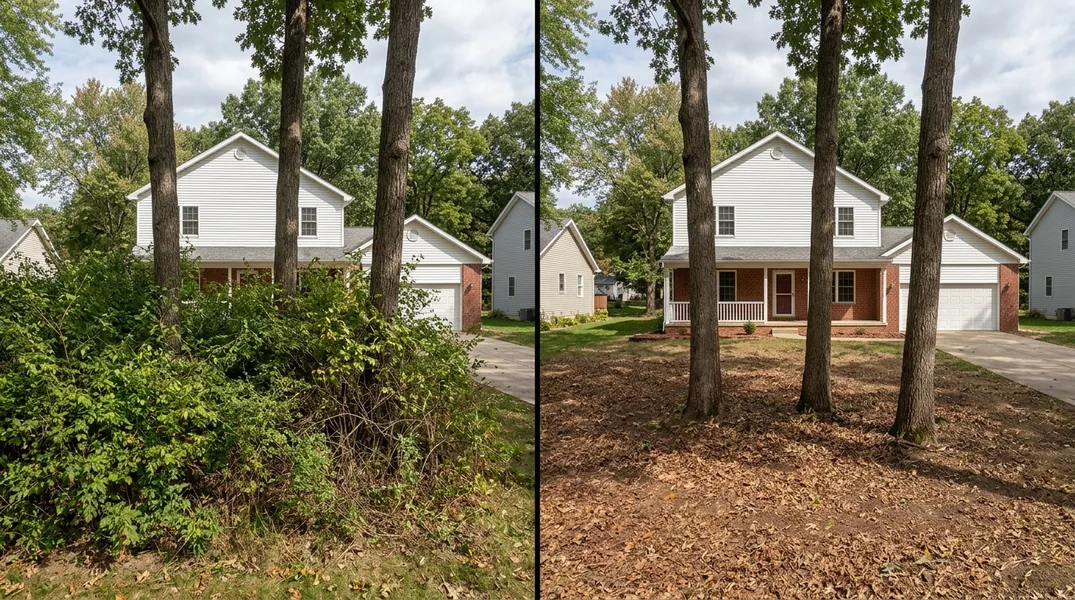
Understanding the Emerald Ash Borer Threat in Indiana
The emerald ash borer (EAB) has become one of the most destructive forest pests in North America, and Indiana is no exception. This invasive beetle, native to Asia, was first detected in the United States in 2002 and has since spread to nearly every state, including Indiana. For homeowners in South Bend and the surrounding Michiana region, the presence of emerald ash borer in Indiana represents a serious threat to ash trees on residential properties.
The beetle larvae feed beneath the bark of ash trees, disrupting the tree's ability to transport water and nutrients. Once an ash tree becomes infested, the damage progresses rapidly. Most ash trees die within three to five years of infestation if left untreated. Understanding this pest and your options for managing it is essential for protecting your landscape and property value. The good news is that you have choices, and South Bend Tree Service is here to help you make the right decision for your specific situation.
Signs Your Ash Tree Is Infested with Emerald Ash Borer
Recognizing the early signs of emerald ash borer infestation can make the difference between saving your tree and losing it. One of the most telltale indicators is the presence of D-shaped exit holes in the bark, typically about one-eighth inch in diameter. These holes appear where adult beetles emerge from the tree in late spring and early summer. If you notice these distinctive markings on your ash trees, it's time to act quickly.
Other warning signs include canopy dieback, where the upper branches lose their leaves and appear dead while the lower portions remain green. You may also observe bark splitting or peeling, especially along the trunk and major branches. Woodpecker damage is another indicator, as these birds are attracted to trees infested with EAB larvae and will peck away bark searching for food. Additionally, new shoots or sprouts sprouting from the trunk or base of the tree (called epicormic growth) suggest the tree is under severe stress. If you've spotted any of these symptoms on your ash trees in South Bend, a professional inspection is your next step.
Emerald Ash Borer Treatment: Can Your Tree Be Saved?
If your ash tree is in the early stages of infestation or you want to protect a healthy ash tree from future EAB damage, treatment options are available. The most effective approach involves trunk injections of insecticide, typically containing imidacloprid or emamectin benzoate. These systemic treatments work by circulating through the tree's vascular system, poisoning the beetles as they feed on the wood. When applied to trees that are still relatively healthy, trunk injections can be highly effective at preventing or slowing infestation.
The timing and frequency of treatment matter significantly. Injections are typically administered every one to two years, depending on the product used and the tree's condition. For optimal results, treatments should begin before the tree shows significant signs of damage. However, once a tree has lost more than 50 percent of its canopy or shows extensive bark damage, treatment becomes less viable, and Tree Removal may be the more practical option. Consulting with an arborist who understands emerald ash borer treatment protocols is essential before committing to this approach.
Ash Tree Injection Cost in South Bend: What to Budget
When considering emerald ash borer treatment, understanding the financial investment is crucial. The pricing for ash tree injections typically ranges from $150 to $400 per treatment, depending on the tree's size, location, and the specific product used. Larger trees generally cost more to treat because they require more insecticide to ensure adequate distribution throughout the tree's vascular system. Most homeowners need to budget for treatments every one to two years to maintain protection, which means annual or biennial costs of $150 to $400 per tree.
While treatment costs can add up over time, they may be worthwhile if you have a large, healthy ash tree with significant sentimental or landscape value. However, if you have multiple ash trees or if your trees are already heavily infested, the cumulative cost of ongoing treatments might exceed the cost of removal and replacement with a different species. To determine the most cost-effective solution for your property, we recommend getting a free estimate from South Bend Tree Service. Our experienced arborists can assess your trees and provide a detailed breakdown of treatment versus removal options.
When to Remove an Ash Tree: The Case for Tree Removal
Tree Removal becomes the recommended option when an ash tree is heavily infested, severely damaged, or poses a safety risk to your home or property. If your tree has lost more than 50 percent of its canopy, has extensive trunk damage, or shows signs of structural weakness, removal is often the most practical and cost-effective choice. Additionally, if you have multiple ash trees on your property, removing all of them and replanting with EAB-resistant species may be more economical than treating each tree individually year after year.
Another factor to consider is the tree's location. If your ash tree is close to your house, power lines, or other structures, the risk of failure due to EAB damage increases the urgency of removal. Dead or dying ash trees become brittle and prone to branch failure, which could result in costly damage to your property or injury. Following removal, Stump Grinding is often recommended to eliminate the stump and prevent regrowth or pest infestation. South Bend Tree Service has the equipment and expertise to safely remove ash trees of any size and can handle stump removal as well.
Protecting Your Ash Trees: Prevention and Long-Term Management
For ash tree owners who don't yet have an EAB problem, prevention is the best strategy. Avoiding the movement of firewood and ash wood products from infested areas to your property is one of the simplest preventive measures. If you purchase firewood locally in South Bend, verify that it comes from an EAB-free source. Additionally, maintaining tree health through proper Tree Trimming & Pruning, adequate watering, and mulching can help your ash trees resist infestation and recover more effectively if exposed to the beetle.
For the long term, consider diversifying your landscape by planting native, EAB-resistant tree species. Species like oak, maple, and hickory are excellent alternatives that provide similar aesthetic and environmental benefits without the emerald ash borer risk. If you're uncertain about your ash trees' current health status or need guidance on treatment versus removal, the experienced arborists at South Bend Tree Service are ready to help. Call us at (219) 291-3724 or request a free estimate today to discuss your options and develop a management plan tailored to your property.
Looking for a professional tree service contractor in South Bend? South Bend Tree Service responds fast for all your tree service needs.
Get a Free QuoteOur services: Tree Removal · Tree Trimming & Pruning · Stump Grinding